
Is Donation-Based Crowdfunding Helpful?
The USA Deaflympians have received zero support from the U.S. Olympic & Paralympic Committee since 2003.

Several sources indicate that donation-based crowdfunding is fundamentally legal.
Some of you might think I could talk about a teenager named Karmelo Anthony. Yes, but I'm going to tell you more about the USA Deaflympians' crowdfunding problems.
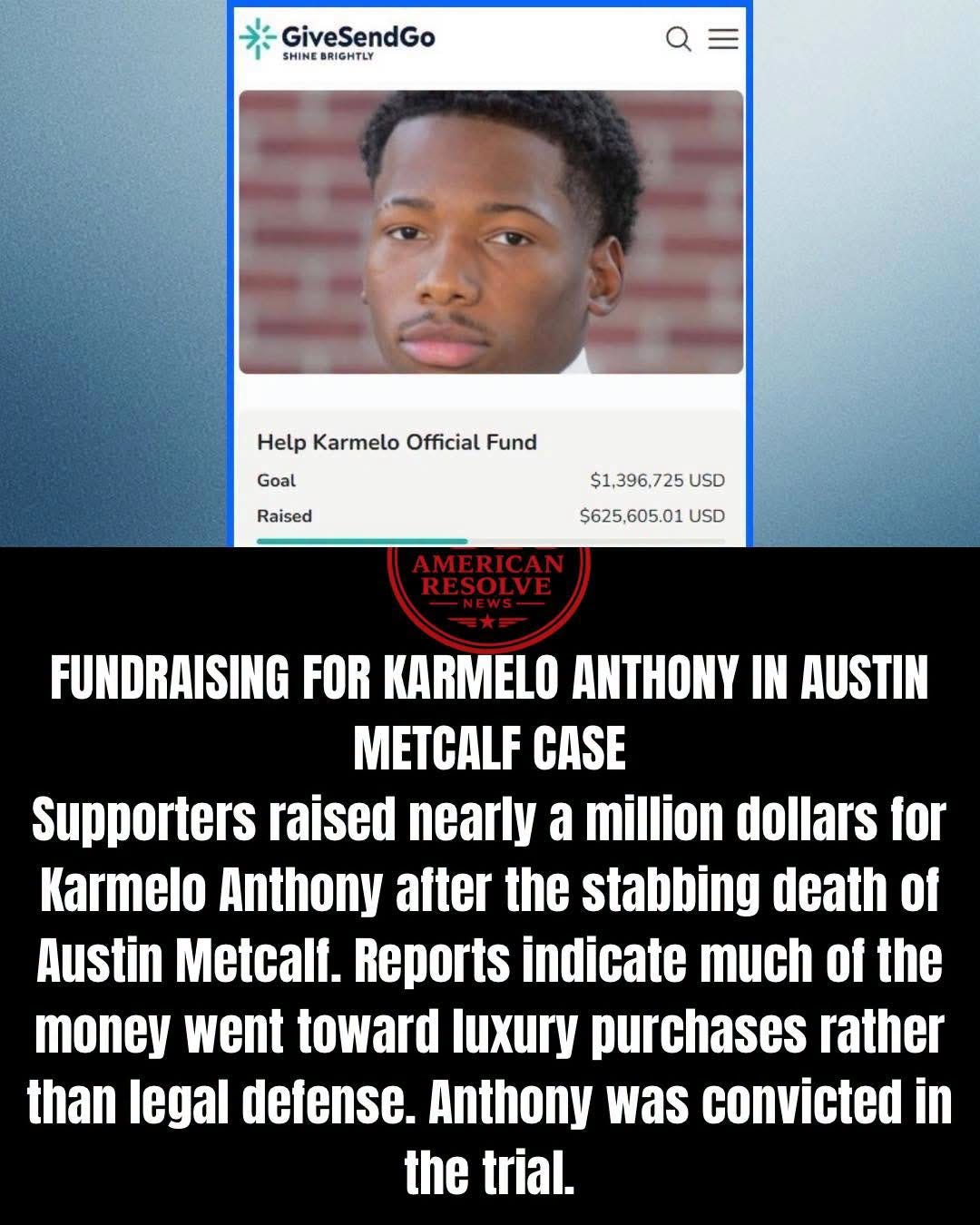
When I first saw this post, I already knew his supporters had run a crowdfunding campaign last year. Suddenly, the post mentioned GiveSendGo, a platform I had never heard of.
Yesterday, the GiveSendGo fund, organized by Anthony’s mother on April 15, 2025 (two weeks after Anthony stabbed Austin Metclif), went offline after the jury found Anthony guilty. Unlike GoFundMe, GiveSendGo allows fundraising for criminal cases.
Last night, a new “GiveSendGo” fund called the “Justice for Black Youth Solidarity Fund” was set up with a goal of $600,000.
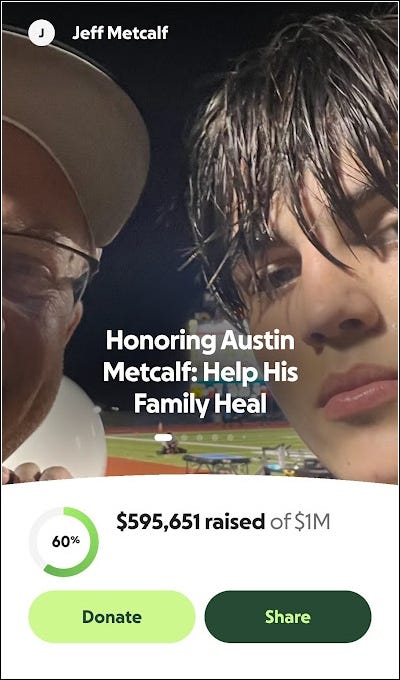
Ironically, Austin Martin, whom Anthony murdered, has an active GoFundMe showing $599,862 of a $1,000,000 goal (as of today at 8:06 pm EDT).
Launched in 2020 by Leonardo DiCaprio and Laurene Powell Jobs, the America’s Food Fund campaign raised the most money ever on GoFundMe, totaling $45.1 million.
A few other well-known GoFundMe campaigns had raised more than one million dollars: The Official George Floyd Memorial Fund ($14.7 million), Las Vegas Victims’ Fund ($11.8 million), Stoneman Douglas Victims’ Fund ($10.1 million), Support Victims of Pulse Shooting ($7.8 million), and Justice for Breonna Taylor ($6.7 million).
The most successful GoFundMe campaign could be “Chauncy’s Chance.”
A grocery store encounter between Matt White and 15-year-old Chauncy Black (who was living in extreme poverty) led Matt to start a $500 fundraiser to help Chauncy buy a lawnmower. Through compelling storytelling and viral social media posts, the fundraiser grew to over $342,100, providing the family with a new home and financial security.
But five years later, in 2021, Chauncy was sentenced to six years and six months in prison for killing a neighbor in 2020. He was then released on probation. Since then, Chauncy has been arrested several times, and many of his cases have been dismissed or resulted in probation.
~~~~~~~~~~~~~~~~~~~~~~~~~~~~~~~~~~~~~~~~~~~~~~~~~~~
USA Deaflympians’ Crowdfunding Problems
Unlike U.S. Olympic and Paralympic athletes, U.S. Deaflympic athletes do not receive financial subsidies from the U.S. Olympic & Paralympic Committee (USOPC). Athletes must independently raise to $7,500 to cover travel to the 2025 Summer Deaflympics in Tokyo, as well as coaching, equipment, and registration fees.
Most members of the 2025 USA Deaf team used crowdfunding platforms such as GoFundMe, Spotfund, SignUpGenius, MightCause, and GiveButter.
Six months before the 2025 Summer Deaflympics on May 20, 2025, I wrote a newsletter issue titled "Challenges in Crowdfunding for USA Deaflympians.”
Let us look at the struggling Klotz family.
The mother, Linda, created a GoFundMe for Matt, her son’s fourth appearance at the Deaflympics on February 20, 2025, with a $4,000 goal. The campaign did not start well.
On May 22, KTAL News (of Shreveport, LA) published an article about Matt’s needs.
On June 11, the Mountain Democrat (of Placerville, CA, where Matt grew up) ran a similar article, “Matt Klotz dives into the next challenge,” and urged readers to donate to Matt’s fund.
On July 4, Gold Mountain California News Media, which covers Matt’s Vista del Lago high school, published “Klotz hopes to break record at Deaflympics.”
Eleven months later, on June 9, 2026, Matt’s fund stood at $620 (15% of his $4000 goal).
By September 28, his fund reached 30% ($1,190).
On November 8, their Louisiana friend, Karen Gause, made an emotional appeal to her 5K Facebook followers, “My friend and her son need your help! … Matt leaves in a week to represent Team USA without any financial support for deaf athletes - Team USA supports all but deaf - any support is appreciated THANK YOU!!” She added twenty (20) hangtags to her post.
Her strategy worked. See the result below.
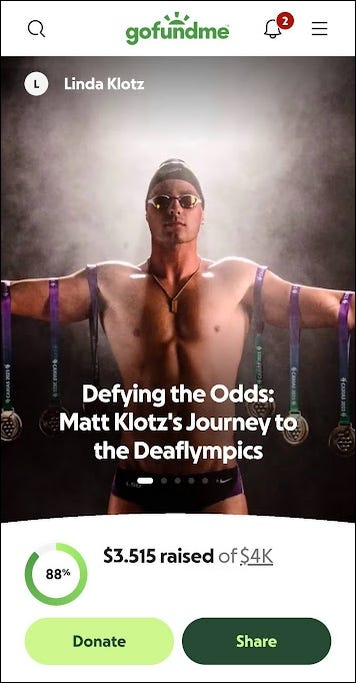
Interestingly, he is the same Matt Klotz who was the runner-up on CBS’s Big Brother 25 (2023). The finale drew about 3.3 million viewers.
“Low Initial Public Awareness: Despite reaching millions of viewers on Big Brother, awareness of the GoFundMe that his mother, Linda Klotz, launched was low. Many fans were unaware that the Deaflympics for athletes in the USA required self-funding,” states Google Gemini.


After the Tokyo Games, Matt became the most decorated American deaf athlete in Deaflympic history, with 32 medals, including 5 gold, 2 silver, and 3 bronze from the 2025 Games.
Unfortunately, Matt’s USA Swimming team had raised only $34,608 (29% of the $120,000 goal). This is consistent with other sports teams: the Athletic (Track & Field) team at $29,040 (19% of the $150,000 goal), the Men’s Basketball team at $2,389 (2% of the $115,200 goal), the Cycling Team at $35,725 (35% of the $100,000 goal), and the Volleyball Team at $20,959 (8% of the $250,000 goal). However, individuals on these sport teams raised separate funds for themselves.
Sadly, many selected athletes had not reached their goals, so some resigned from their teams, while others borrowed money or paid out of pocket.
NOTE: The U.S. Deaf Soccer National Teams (Men’s and Women’s) are fully funded Extended National Teams, managed by United States Soccer in partnership with the USA Deaf Soccer Association.
Based on my research, the top 2025 USA Deaflympic individual campaign could be for 13-year-old swimmer Quinn Avery Cannon, who has raised $26,135 (77% of the $34,000 goal). Most of the fund covered her family's chaperoning expenses since Quinn is underage.
Quinn was the first of 173 athletes to reach the goal, exceeding it in 48 hours! She also earned a bronze medal in the Women's 4x200m Freestyle Relay.


We have another interesting story about 17-year-old tennis player Chelsie Brown. She was named to the 2025 USA team at the last minute. Her high school interpreter for the deaf set up a GoFundMe for Chelsie on September 25, just two months before the Games began. The fund was successfully disbursed and covered her family’s chaperoning expenses. Like Quinn, Chelsie won the bronze medal in the women’s doubles event.
Based on my 58 years of Deaflympic experience, I can tell you that first-time selected athletes raise funds more easily than repeat Deaflympians, such as Klotz, a four-time Deaflympian.
Could donation-based crowdfunding be helpful to future Deaflympians? I would rather say NO!
~~~~~~~~~~~~~~~~~~~~~~~~~~~~~~~~~~~~~~~~~~~~~~~~~~~~~~~~~~~~~~
How could these crowdfunding challenges for future athletes who are deaf or hard of hearing be resolved?
The best approach is to ask the United States Senate Committee on Commerce, Science, and Transportation to comply with the recommendations in the 2024 Final Report of the Commission on the State of U.S. Olympics & Paralympics as follows:
“Congress should also study further the challenges faced by deaf and hard-of-hearing athletes and proposals to integrate deaf sports into the U.S. Olympic and Paralympic movement; in the meantime, USOPC should work with the USA. Deaf Sports Federation to remove impediments to its full use of Deaflympic trademarks and access to sponsorships.”
Howard “Howie” Gorrell attended 14 of the last 15 Deaflympics since 1969. He is a 2004 recipient of the USADSF Jerald M. Jordan Award, given to those who exhibit leadership and sustained participation toward the goals of the Deaflympics, and the 2011 Art Kruger Award for demonstrating leadership, sustained participation, support, and contributions to the USA Deaf Sports Federation (USADSF) over an extended period.