
A "1x4" Voter ???

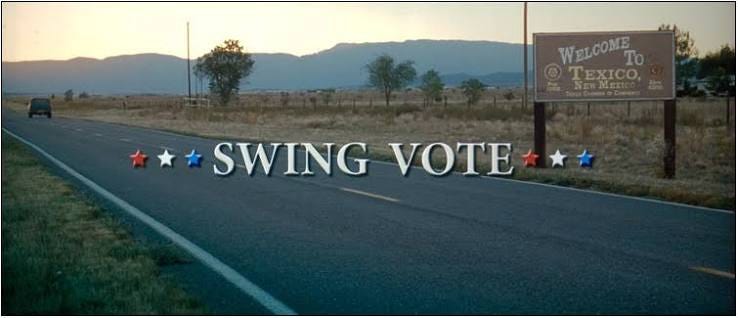
Earnest “Bud” Johnson of Texico, New Mexico (population 1065 in the 2000 census) could be the No. 1 “1x4” voter after the 2008 U.S. presidential election.
The image above should make it clear that it is fictional. Yes, the 2008 fictional film ‘Swing Vote” was directly inspired by the razor-thin, disputed electoral chaos in Florida during the 2000 presidential election. [While 105,405,100 votes were cast, the election came down to a margin of just 537 votes in Florida. These 537 votes were 0.000509% of the national vote cast.]
This film follows Bud Johnson (played by Kevin Costner), a NASCAR-loving, beer-drinking loser whose single, uncast vote was accidentally lost because of a machine glitch at the Texico polling station.
Several hours later, the Electoral College update showed the Democratic candidate leading his Republican opponent by one vote, 267 to 266, with one state, New Mexico, still holding five electoral votes. (The magic number to win was 270.) The outcome then came down to the tiny Curry County, which was still too close to call. It sounded like the bottom of the ninth inning of a baseball game on a glorious summer’s day. There were only 653 registered voters in Texico. The following day, the New Mexico Election Bureau reached all but one of these Texico voters by phone.
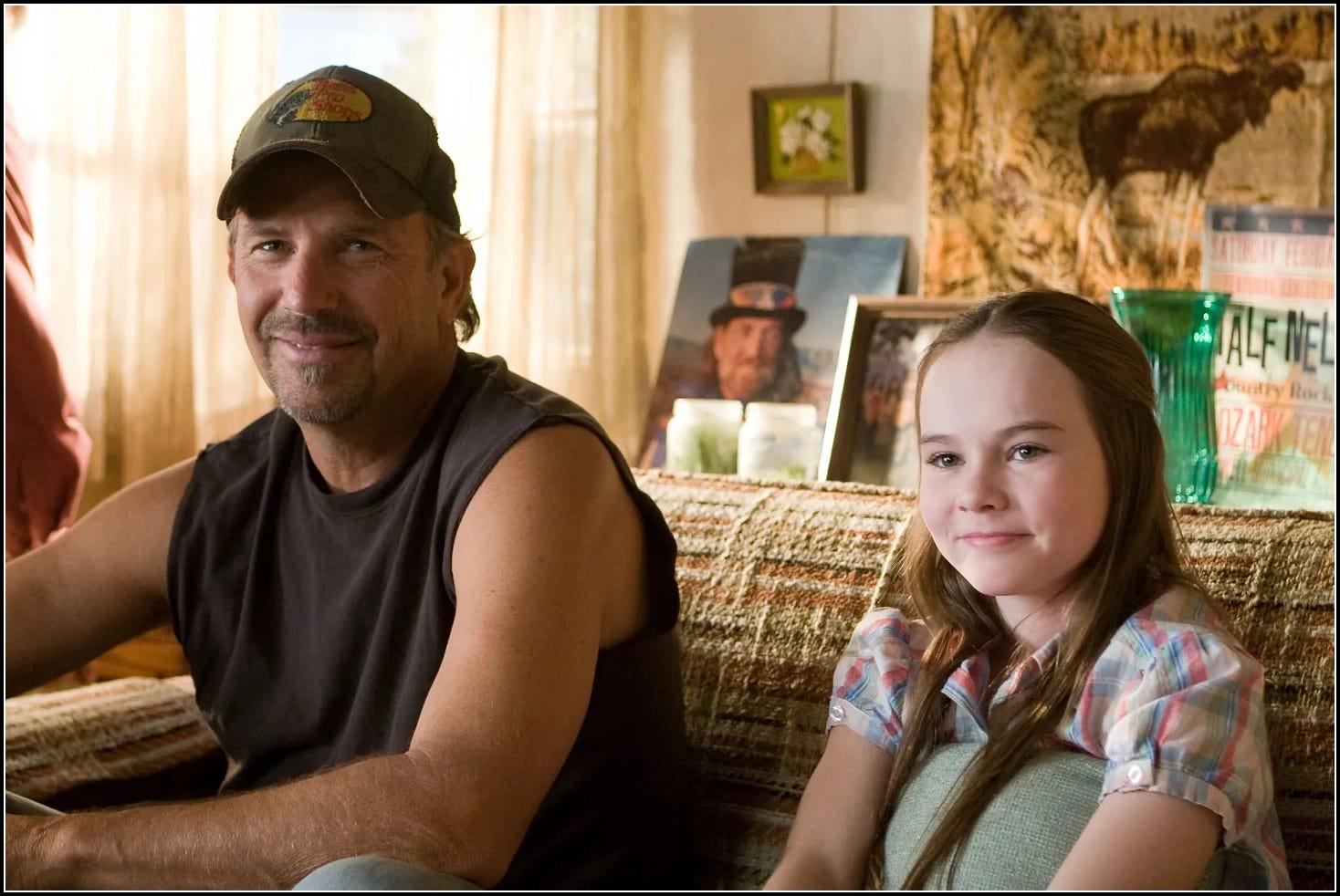
That one turned out to be Bud Johnson! Two men from the state government, the Secretary of State and the State Attorney General, came to Bud’s trailer and questioned him in the presence of his politically savvy 12-year-old daughter, Molly (Madeline Carroll), about whether he had actually voted. Bud weakly answered yes. The men asked for a ballot stub. He looked puzzled and fooled them into thinking he had gotten it for his daughter’s class project. Molly, a whip-smart student who aspired to be a veterinarian or “chairman of the Fed,” retrieved the stub. The men instructed Bud to recast his miscast vote in 10 days to choose the next leader of the free world (there was a lot of paperwork involved). In other words, Bud would decide the nation’s President.
Did I say he doesn’t vote at the Texico polling station? Actually, he didn’t. (You have the film to find out what happened.)
After spotting a long, snaking line of identical satellite news trucks heading toward her hometown of Texico, local reporter Kate Madison (Paula Patton) turned around and headed back to her station, begging her supervisor to let her break the news. The supervisor agreed.
Overnight, the small, sleepy town of Texico was transformed into a massive media and political circus. Reporters, lobbying groups, corporate sponsors, special interest groups, merchandisers, and both presidential candidates, the Republican incumbent Andrew Boone (Kelsey Grammer) and the Democratic challenger Donald Greenleaf (Dennis Hopper), descended on the town, camping outside Bud’s trailer and turning the community into a chaotic, noisy circus.


On the following days, the candidates tried to appeal to Bud’s specific interests.
Boone’s campaign manager sent Richard Petty (playing himself) to pick up Bud and let him drive his famous No. 43 race car as part of a political strategy to direct him to Air Force One for a face-to-face meeting with the President.


At Greenleaf’s request, Willie Nelson (playing himself) invited Bud onstage to play guitar and perform with him in his band as a personal favor to the Democratic challenger.
The climax of the ten days was a massive, televised presidential debate held directly in front of Bud on the ninth day, during which the candidates had to answer questions submitted by the public to win Bud’s vote.
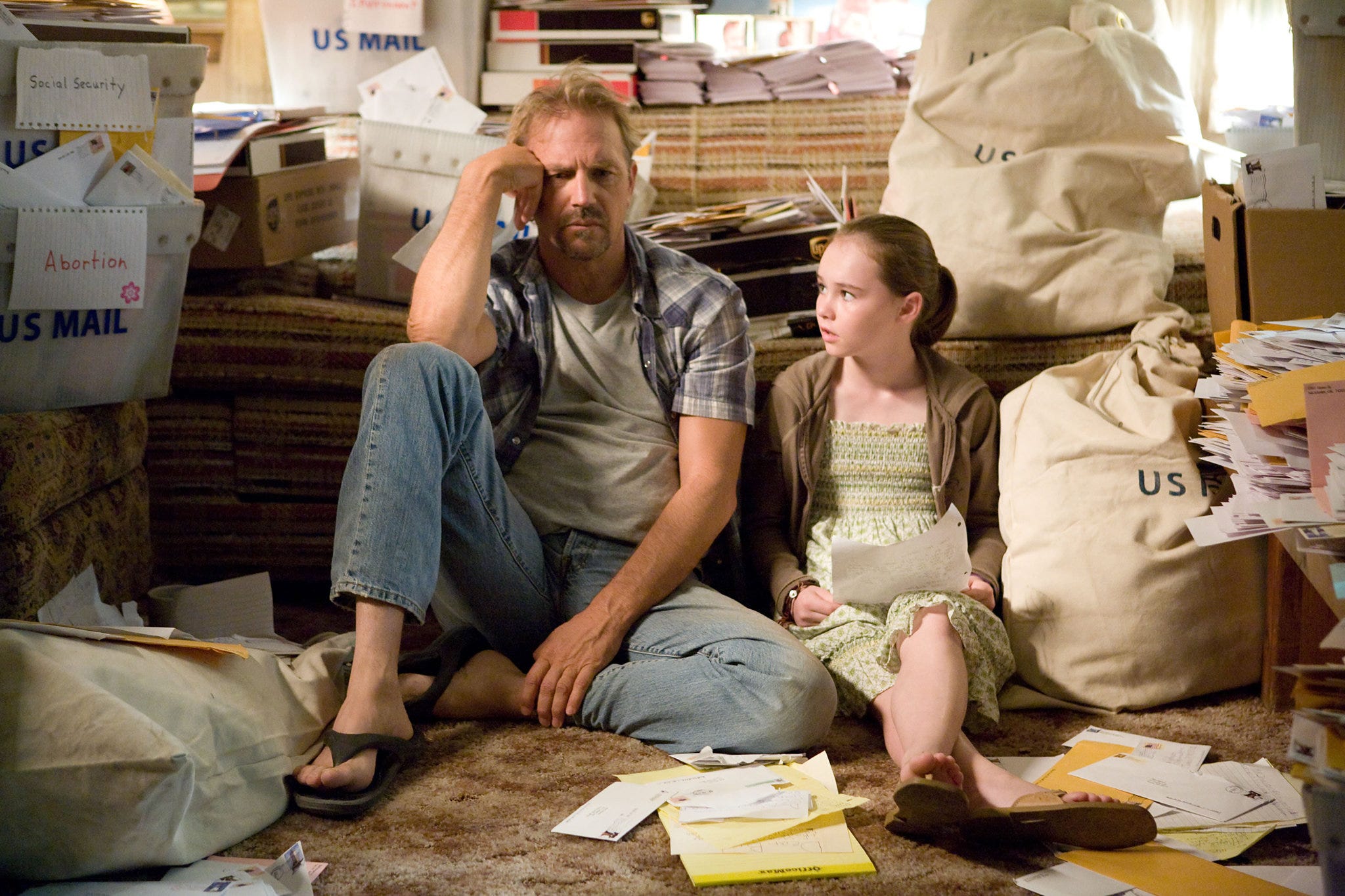
After Molly sorted the mail into categories on the eve of the Debate, Bud, who had accidentally become the sole deciding voter in a tied U.S. Presidential election, had to read through hundreds of emails to select questions for the candidates. Then Kate finalized the debate questions.


After delivering his written statement to both candidates, Bud, serving as the solo debate moderator, read a letter from a citizen and posed the first question to the presidential candidates in the final debate:
Tonight, I am going to speak for people I have never met... whose letters touched me in a way I didn’t think possible. My first question comes from... Peter Manthis in Henderson, Kentucky. “Dear Mr. Johnson... my wife and I have three little girls. We both work two jobs just trying to make ends meet. And some weeks, we don’t make it. When you work hard and still can’t take care of your family... you start to question yourself as a provider, as a man. I know I am one. I fought for my country, and I’m proud of it. But it scares me to think about what would happen if one of my kids got sick. Can you ask the candidates, if we are the richest country in the world... how come so many of us can barely afford to live here?”
The next morning, Bud cast his ballot as Molly watched with a smile.
[The film does not reveal who won the final race.]
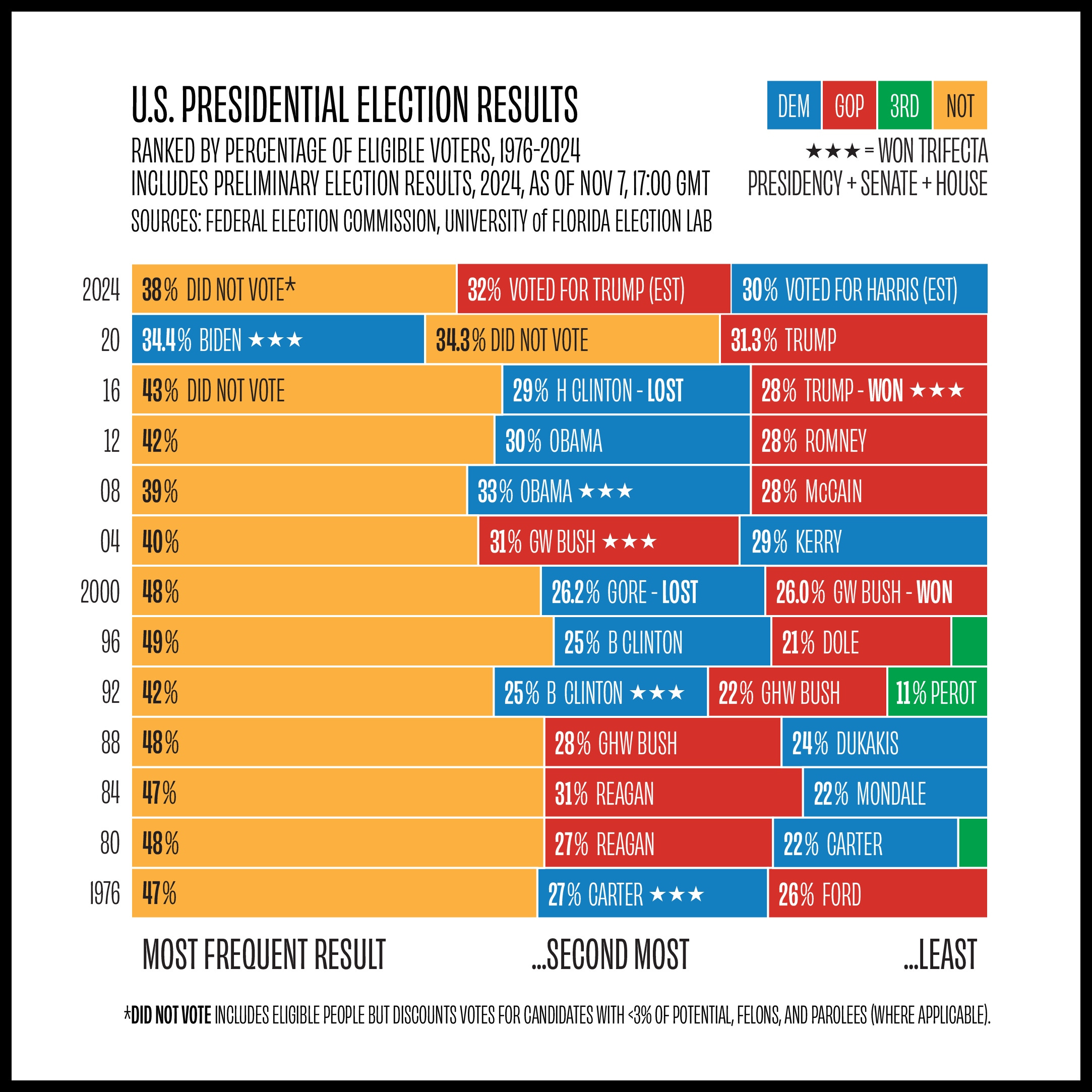
The film received mostly negative reviews from critics. On Rotten Tomatoes, it has an approval rating of 38% based on 151 reviews. Please ignore these negative reviews, as the film could be educational for U.S.-registered voters who did not actually vote. See the chart below.
A “1x4” Voter ???
Despite my 12 years as an election statistician on Capitol Hill, I had never heard of it until 2014, when I lived in Yakama, WA. I'd better explain now.
A 4x4 voter is a high-propensity super-voter who has voted in all 4 primary and general elections over the past two years. This voter is considered highly reliable and almost certain to vote.
A 3x4 voter is a reliable supporter who has voted in 3 of the last 4 elections. This voter might miss a lower-turnout midterm election or a low-interest primary election.
A 2x4 voter is a periodic voter who cast ballots in 2 of the last 4 elections. This voter participated in major elections that occur at multi-year intervals, such as presidential elections every four years.
A 1x4 voter is a low-propensity voter or a newly registered voter who voted in only 1 of the last 4 elections.
In political campaigning and voter data analysis, “4x4” and “3x4” are terms political consultants use to score a voter’s reliability based on past election turnout. These metrics help campaigns allocate resources, such as targeting specific households for mailers, phone calls, or door-knocking.
Here are the most effective channels for each voter group.
4X4 Voters: Email newsletters, donor events, high-level policy briefings, and peer-to-peer texting toolkits.
3X4 Voters: Targeted digital ads, direct mail campaigns, and localized phone banks.
2X4 Voters: Door-to-door canvassing, community events, and issue-focused video ads.
1X4 Voters: Deep canvassing, trusted community validators, non-partisan educational mailers, and high-impact social media.
Therefore, the campaign budget is recommended to be allocated as follows:
Spend 20% on 4x4 and 3x4 segments: Use low-cost digital channels and mail to keep them engaged.
Spend 80% on 2x4 and 1x4 segments: Dedicate the bulk of paid media, field organizers, and literature to these harder-to-reach blocks.
Rock the Vote
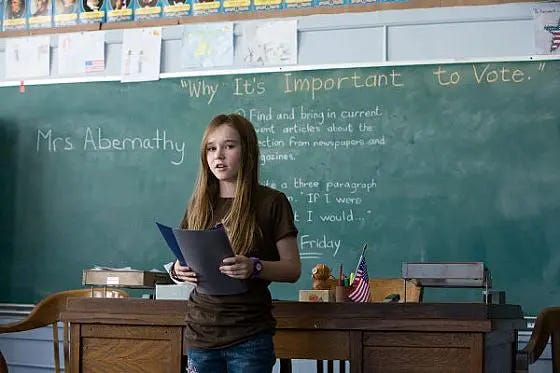
In this image, Molly was in her classroom giving a presentation on a project about the importance of voting.
"The conception of political equality from the Declaration of Independence, to the Fifteenth Amendment, to the Seventeenth Amendment, and to the Nineteenth Amendment can mean only one thing—one person, one vote."— Chief Justice Earl Warren (Reynolds v. Sims, 1964)
Have you registered to vote in the 2026 General Election on Tuesday, November 3?
Will you brag to your friends about being a 1x4 voter, or stay silent because you have been a 4x4 voter for decades?
Ready to brace for the incoming election materials and for going to the kitchen or bathroom during the televised election commercials?
That being said, go vote.
~~~~~ THE END ~~~~~